ICD vs Pacemaker: Which One Is Right for You?
You may have questions after hearing that you may need a heart device. What is it, and why do you need it? Pacemakers and ICDs are both for heart rhythm problems but are not interchangeable. One mainly helps when the heartbeat is too slow. The other can react to dangerous rhythms. Understanding the basics of ICD vs Pacemaker can make the recommendation easier to understand.
What Does a Pacemaker Do?
The heart has an electrical system that tells it when to beat. Sometimes those signals are slow or blocked. When the heart needs help, a pacemaker device delivers small electrical signals. It is usually placed under the skin near the collarbone. It may have one or more leads attached to the heart.
A pacemaker may be used for:
- A very slow heartbeat
- Certain types of heart block
- Fainting or dizziness from a slow heart rate
What Is an ICD?
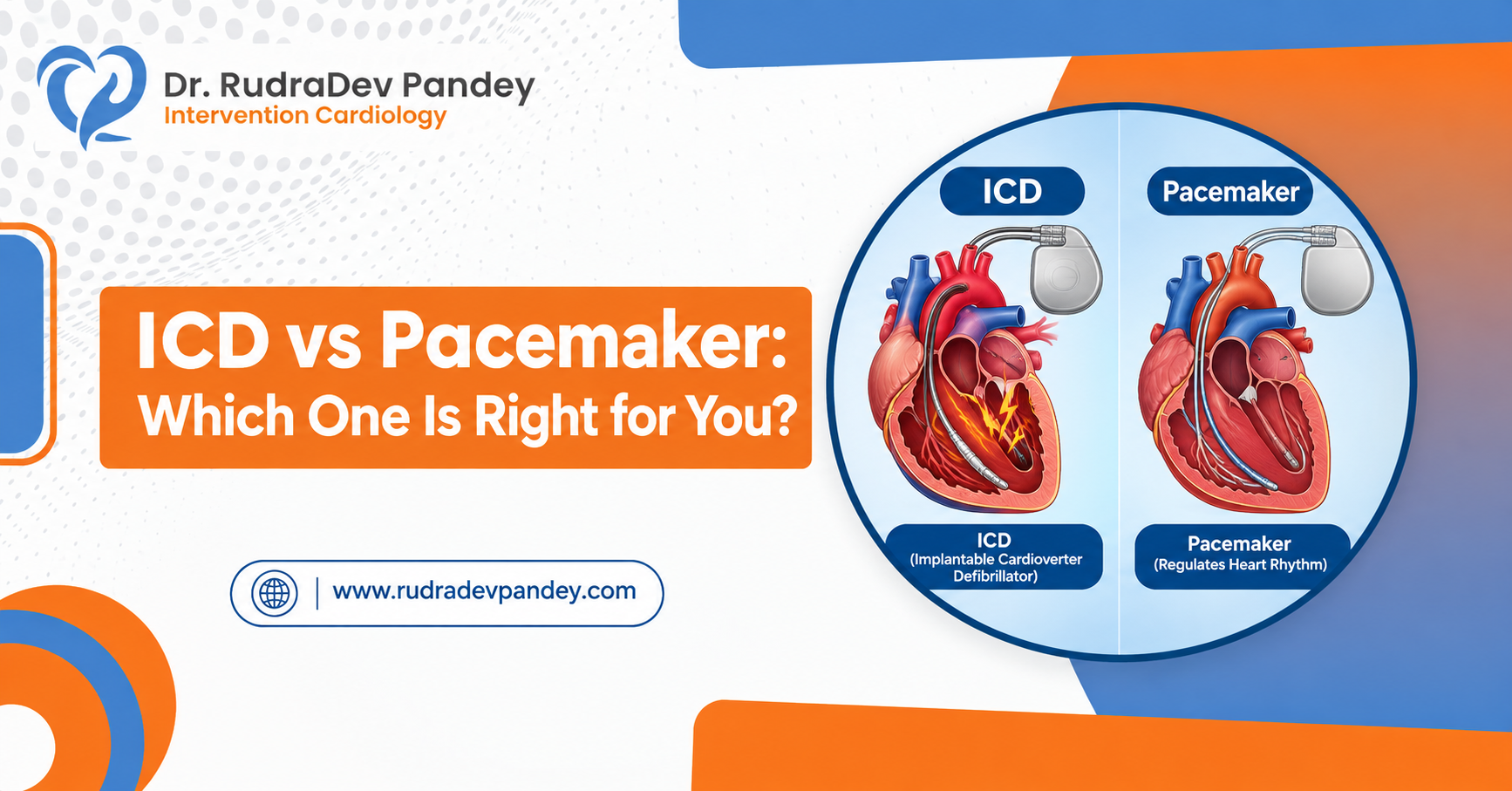
An ICD, or implantable cardioverter-defibrillator, has a different job. It continuously checks the heart rhythm and can react when it detects a dangerous rhythm.
If the rhythm becomes life-threatening, it can give an electrical shock. It can also provide pacing when the heartbeat becomes too slow.
An ICD may be considered for:
- Certain serious ventricular arrhythmias
- A previous cardiac arrest caused by an abnormal rhythm
- A heart condition linked to sudden cardiac arrest
- Reduced heart pumping function in selected cases
ICD and Pacemaker Difference
The ICD and pacemaker difference becomes clearer when you look at what each device is meant to do. A pacemaker mainly deals with a heartbeat that is too slow. An ICD is mainly concerned with dangerous, fast rhythms and can deliver a shock when necessary.
|
Pacemaker |
ICD |
| Mainly helps with slow heart rhythms | Mainly treats certain dangerous fast rhythms |
| Sends electrical impulses | Can send impulses and an electrical shock |
| Often used for conduction problems | Used when there is a risk of serious ventricular arrhythmias |
| Does not normally deliver a defibrillation shock | Can deliver a shock when required |
So , ICD vs Pacemaker is not about choosing the better device. The question is which device matches your heart problem.
Can an ICD Be Used for Heart Failure?
Heart failure does not automatically mean that an ICD is needed. The decision depends on heart function and rhythm risk.
For some patients with a poorly pumping heart and a risk of a serious abnormal rhythm, an ICD for heart failure may be considered. Before recommending an ICD, the cardiologist will usually review:
- How is your Cardiac function
- ECG and other test findings
- Any previous irregular heartbeats
Based on these findings, another type of heart device may be better.
What Happens During Pacemaker Implantation?
Insertion of a pacemaker is usually performed in a hospital under local anesthesia. The doctor makes a small incision, usually below the collarbone, and inserts the device just under the skin. When a pacemaker is implanted, the doctor threads leads through a blood vessel into the heart. The device is tested before the procedure is completed. For selected patients, Leadless Pacemaker Implantation in Jaipur may be an option depending on their heart condition.
Then, you may be instructed to:
- Keep the wound clean and dry.
- Don’t lift heavy things for a while
- Take your medicines as directed
- Attend follow-up visits
Your doctor will tell you when normal activities can resume.
How Does a Cardiologist Choose?
No single device suits everyone. Your cardiologist first needs to understand why your heart rhythm is abnormal and whether there is a risk of a serious rhythm problem.
The assessment can include:
- ECG or rhythm strip monitoring
- Heart echo test
- Role of the heart as a pump
- Old rhythm problems
- Symptoms like fainting or palpitations
- This information identifies the device.
Selecting the Right Heart Device with Dr. Rudradev Pandey
Dr. Rudradev Pandey checks your heart rhythm, ECG, cardiac pumping function, symptoms, and previous cardiac history before suggesting a device. If an ICD is suggested, then you can discuss ICD Implantation in Jaipur. He explains why you may need an ICD, how the procedure is done and what the follow-up care looks like.”
Know Your Treatment Options Before You Decide
The difference between an ICD vs pacemaker is important because these devices are used for different heart rhythm problems. If your cardiologist suggests leadless pacemaker then ask him why it has been recommended, how it will help, and what the recovery will be like. Clear answers can make the next step easier to comprehend.